
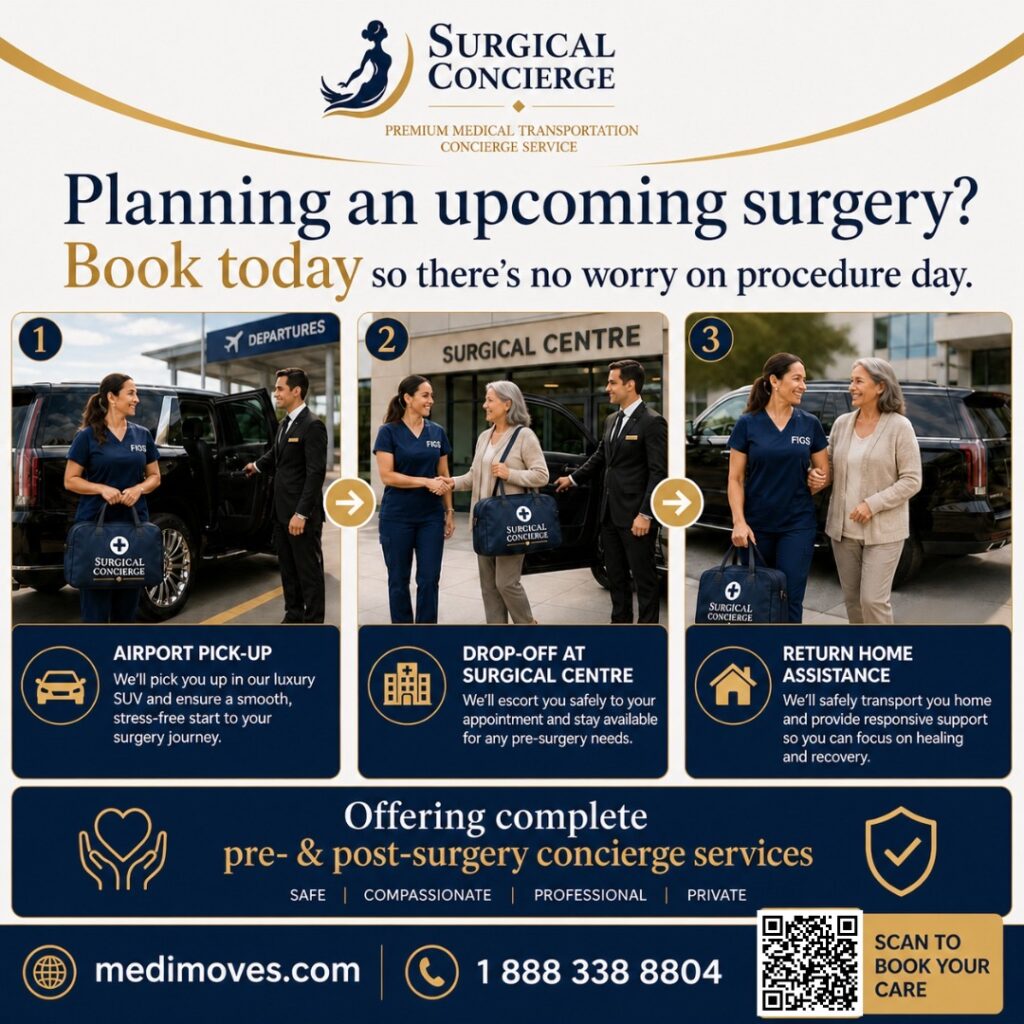
Your Path to Recovery Starts the Moment You Leave the Operating Room
When patients plan cosmetic surgery, almost all of their attention goes to choosing the surgeon and the procedure. Far less goes to a question that has just as much influence on how smoothly you heal: how will you get home, and who will help you in the days that follow? The truth is that your recovery begins the moment you leave the operating room — and the transportation and care you arrange around your procedure can make the difference between a calm, comfortable recovery and a stressful, risky one.
This guide explains why choosing the right transportation service matters, and how to manage and arrange your after-surgery care across the three stages of recovery: the critical first 24 hours, the 24–72 hour stage, and 72 hours and beyond.
Why the Right Transportation Service Matters
Immediately after surgery you are not yourself. Anesthesia and sedation leave you groggy and unsteady, your movement is limited, and many procedures restrict how you can sit or lie down. For these reasons, your surgery center will not discharge you to drive yourself — and a standard rideshare driver simply isn’t prepared for a patient who has just come out of sedation. It’s not safe, and most centers won’t allow it.
The right service does far more than move you from A to B. It arrives expecting a recovering patient, brings the correct vehicle for your procedure (including a stretcher for BBL patients who can’t sit), guarantees an on-time pickup coordinated with your surgery center, and can continue supporting you once you reach your hotel or B&B. Choosing that kind of service before your surgery date removes the single biggest source of recovery-day stress.
Managing Your Recovery, Stage by Stage
Healing happens in phases, and each phase has different needs. Here’s how to think about arranging care for each one — ideally before your procedure, not after.
| Stage | What’s happening | What you need arranged |
| First 24 hours | Highest-risk window — groggy from anesthesia, limited mobility, pain begins | Safe transport home + someone to monitor, hydrate, and manage medication |
| 24–72 hours | Swelling and discomfort peak; movement is hardest | Help moving safely, meals & hydration, medication reminders, first follow-up |
| 72 hours & beyond | Gradual return to activity; ongoing appointments | Rides to post-op visits, tapering support, and travel home when cleared |
Stage 1: The Critical First 24 Hours
This is the most important window of your entire recovery. You’ll be drowsy from anesthesia, your pain will begin as the medication wears off, and your mobility will be at its most limited. The priority is simple: get home safely, and have someone with you who can keep you comfortable and monitored.
Arrange these in advance:
- Safe, pre-booked transport from the surgery center directly to your hotel, B&B, or recovery home — no waiting, no improvising
- The right vehicle for your procedure (stretcher for BBL, wheelchair-accessible, sedan or SUV for ambulatory patients)
- Someone to help you settle in, keep you hydrated, and stay nearby in case you need help
- Your prescriptions filled and on hand so pain and nausea are managed from the start
This is also the stage where a “quick rideshare” most often goes wrong. Booking dependable transportation — and care support to your room — ahead of time protects you when you’re least able to manage on your own.
Stage 2: The 24–72 Hour Stage
Over the next two to three days, swelling and discomfort typically reach their peak, and moving around is at its hardest. You may have your first post-operative check-up in this window, and staying ahead of medication, hydration, and gentle movement becomes the focus.
Plan for:
- Help moving safely around your room — to the bathroom, in and out of bed — without straining the surgical area
- Light meal preparation and regular hydration and medication reminders
- Reliable transportation to and from your first follow-up appointment
- Companion support so you’re not managing this stage alone, especially if you’re recovering away from home
Patients who recover in a hotel or B&B after travelling for surgery feel this stage most acutely — there’s no family nearby. Arranging mobile care support to your room bridges that gap.
Stage 3: 72 Hours and Beyond
By now you’re gradually returning to light activity, though full recovery still takes weeks. The needs shift from constant support to scheduled help: getting to ongoing post-op appointments, tapering the level of care as you regain independence, and — for patients who travelled in for surgery — planning a safe trip home once your surgeon clears you.
Arrange for:
- Transportation to follow-up and post-op appointments as needed
- A gradual reduction in care support as your strength returns
- Safe travel home, including out-of-state or out-of-country recovery travel when you’re cleared to go
How to Choose the Right Service
Not every company offering “recovery rides” can support a real cosmetic surgery recovery. As you compare options, look for a service that:
- Offers the full range of vehicles — ambulatory, sedan, SUV, wheelchair-accessible, and stretcher for patients who can’t sit
- Guarantees on-time pickup and coordinates directly with your surgery center
- Goes beyond the ride with mobile care support to your hotel or B&B
- Can handle pharmacy and medication pickup and your pre- and post-op appointments
- Can arrange long-distance travel home, including out of state and out of country
- Is discreet, professional, and assigns you a single point of contact for the whole journey
How MediMoves Supports Every Stage
MediMoves Surgical Concierge Services are built around exactly this path to recovery. From the moment you’re discharged, a single, safe and dependable team handles your transportation in the right vehicle, your pharmacy and medication pickup, and mobile care support delivered to your hotel or B&B. We guarantee an on-time pickup coordinated with your surgery center, and we can arrange recovery travel out of state and out of country when you’re cleared to head home. One Care Manager coordinates it all, so you can focus entirely on healing. Learn more on our cosmetic surgery transportation page, or request a free quote.
Frequently Asked Questions
Before your surgery date. The first 24 hours are the highest-risk window, and surgery centers won’t discharge you without dependable transport arranged. Booking ahead means everything is in place when you’re least able to manage it yourself.
Most surgery centers won’t discharge a sedated patient to a rideshare, and those drivers aren’t prepared for post-operative care. It’s simply not safe. A dedicated service arrives expecting a recovering patient and assists you door-to-door.
That’s exactly when mobile care support matters most, because family isn’t nearby. Our team can come to your hotel or B&B with companion care, recovery support, light meal prep, and hydration and medication reminders.
Yes. Once your surgeon clears you, we arrange safe long-distance recovery travel, including out of state and out of country.
Plan a Calmer, Safer Recovery
The smoothest recoveries are the ones that are planned. Arrange your transportation and care before your procedure, and give yourself one less thing to worry about.
Call MediMoves today at 1-888-338-8804 to connect with a Care Manager, or request a free quote online.